
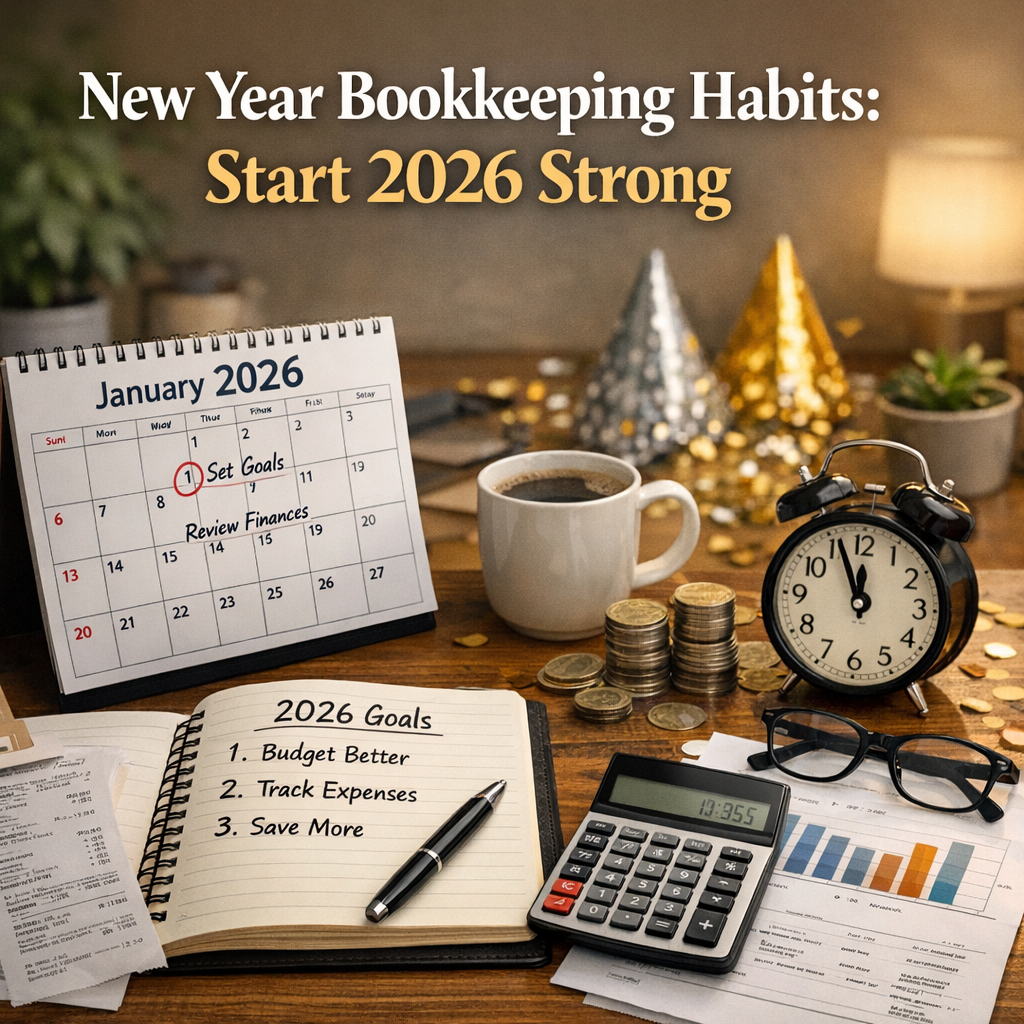
As the calendar flips to 2026, many individuals and small business owners look for ways to improve their financial management. Adopting strong new year bookkeeping habits stands out as one of the most effective steps you can take. These habits help maintain accurate records, reduce stress during tax time, and provide clearer insights into cash flow throughout the year. Moreover, consistent bookkeeping practices allow you to spot trends early, make informed decisions, and avoid costly surprises. Therefore, starting fresh with structured routines sets a solid foundation for financial success in the months ahead.
Why New Year Bookkeeping Habits Matter in 2026
First of all, good bookkeeping goes beyond simply tracking numbers; it delivers real benefits that impact daily operations and long-term growth. For instance, accurate records give you real-time visibility into profits, expenses, and cash flow, which helps prevent overspending or cash shortages. In addition, organized books simplify tax preparation and can minimize liabilities by ensuring deductions are captured properly. According to resources from QuickBooks, separating personal and business expenses remains a top recommendation because it saves time and reduces errors during reviews or audits. Furthermore, when finances stay in order, you gain confidence to pursue opportunities, such as investing in growth or building an emergency fund. As a result, investing time in new year bookkeeping habits early in January pays dividends all year long.
Preparation Steps to Build Strong New Year Bookkeeping Habits
The first few weeks of 2026 offer the perfect window to lay a strong groundwork before daily routines begin. By focusing on cleanup and setup now, you make the rest of the year far easier and more effective.
Here are the key preparation steps to follow:
- Review and close out 2025 by reconciling all bank and credit card accounts through December 31.
- Gather any missing receipts, statements, or uncategorized transactions from the prior year.
- Run final profit and loss reports (and balance sheet if applicable) using your current software or spreadsheet.
- Assess your current setup by listing every financial account and confirming personal and business finances remain fully separated.
- Evaluate your tools—whether a simple spreadsheet or dedicated software like QuickBooks, Wave, or Xero—and decide if an upgrade would help streamline processes.
- Set three to five specific, measurable goals for the year, such as reconciling weekly, cutting miscellaneous expenses by a set percentage, or building a designated cash reserve.
Setting Up Systems for Sustainable New Year Bookkeeping Habits
With preparation complete, the next priority is creating reliable systems that reduce manual effort and support long-term consistency. These foundational changes make daily and weekly tasks feel effortless over time.
Follow these steps to build effective systems:
- Choose or upgrade your primary bookkeeping tool and connect all bank and credit card feeds for automatic transaction imports.
- Customize your chart of accounts with clear, standardized categories such as office supplies, marketing, travel, meals, and utilities.
- Shift to fully paperless operations by scanning or photographing receipts immediately using mobile apps or your phone’s built-in scanner.
- Create an organized digital folder structure (for example: 2026 → January → Receipts / Invoices / Statements) for easy access and archiving.
- Set up automation wherever possible, including recurring bill payments, automatic savings transfers, and transaction categorization rules in your software.
Daily and Weekly Routines That Make New Year Bookkeeping Habits Stick
Daily and weekly actions form the true backbone of lasting bookkeeping success. Keeping these routines simple, consistent, and scheduled prevents small issues from growing into major problems later.
Incorporate these habits into your schedule:
- Daily: Photograph or scan every receipt the moment you receive it, and add a quick note with the purpose, vendor, and business use.
- Daily: Log any cash transactions, petty cash expenses, or non-digital payments immediately to avoid forgetting details.
- Weekly: Block 30 to 60 minutes on a fixed day (such as Sunday evening or Wednesday morning) for your main bookkeeping session.
- Weekly: Reconcile bank and credit card statements against your books to catch discrepancies early.
- Weekly: Categorize all imported transactions, correct any miscategorizations, and enter manual items like cash or checks.
- Weekly: Scan for unusual activity, missing receipts, or upcoming bills, and flag anything that needs follow-up.
Monthly Reviews to Strengthen New Year Bookkeeping Habits
Monthly reviews take your bookkeeping to the next level by providing broader insights and ensuring nothing slips through the cracks. These sessions help you stay proactive rather than reactive.
Complete these tasks each month:
- Run and review core financial reports, including profit and loss, balance sheet, and cash flow summaries.
- Compare actual results against your budgeted or goal amounts to quickly identify variances or trends.
- Reconcile every account, including credit cards, loans, PayPal, Stripe, or other payment platforms.
- File and archive all digital documents for the completed month in your organized folder system.
- Calculate a rough estimate of quarterly taxes if self-employed, using IRS guidelines for payment periods and due dates.
Long-Term Maintenance and Accountability for New Year Bookkeeping Habits
Sustaining new year bookkeeping habits requires built-in reminders and periodic check-ins to keep momentum strong throughout 2026 and beyond. These strategies turn good intentions into automatic behavior.
Implement these maintenance practices:
- Set recurring calendar alerts for weekly sessions, monthly reviews, quarterly estimated tax payments, and major deadlines like W-2 or 1099 filings.
- Maintain strict separation of business and personal finances by using dedicated business cards and accounts for all related transactions.
- Track your progress—at 30 days, review consistency; at 90 days, assess improvements in financial clarity and reduced stress.
- Celebrate milestones, such as treating yourself after three consecutive months of clean records, to reinforce positive habits.
- Adjust your systems or goals as needed based on what works best in your daily life.
Get Help When Needed
Even with solid plans and consistent effort, maintaining perfect bookkeeping can become challenging during busy periods or with more complex transactions. If you ever feel behind, overwhelmed, or unsure about optimizing your setup, reach out to NYA Solutions LLC today. Our experienced team specializes in helping small business owners establish tailored, stress-free bookkeeping systems that fit your unique needs. Contact us now to schedule a consultation and make sure your 2026 remains financially strong and organized with the professional support you deserve.
