
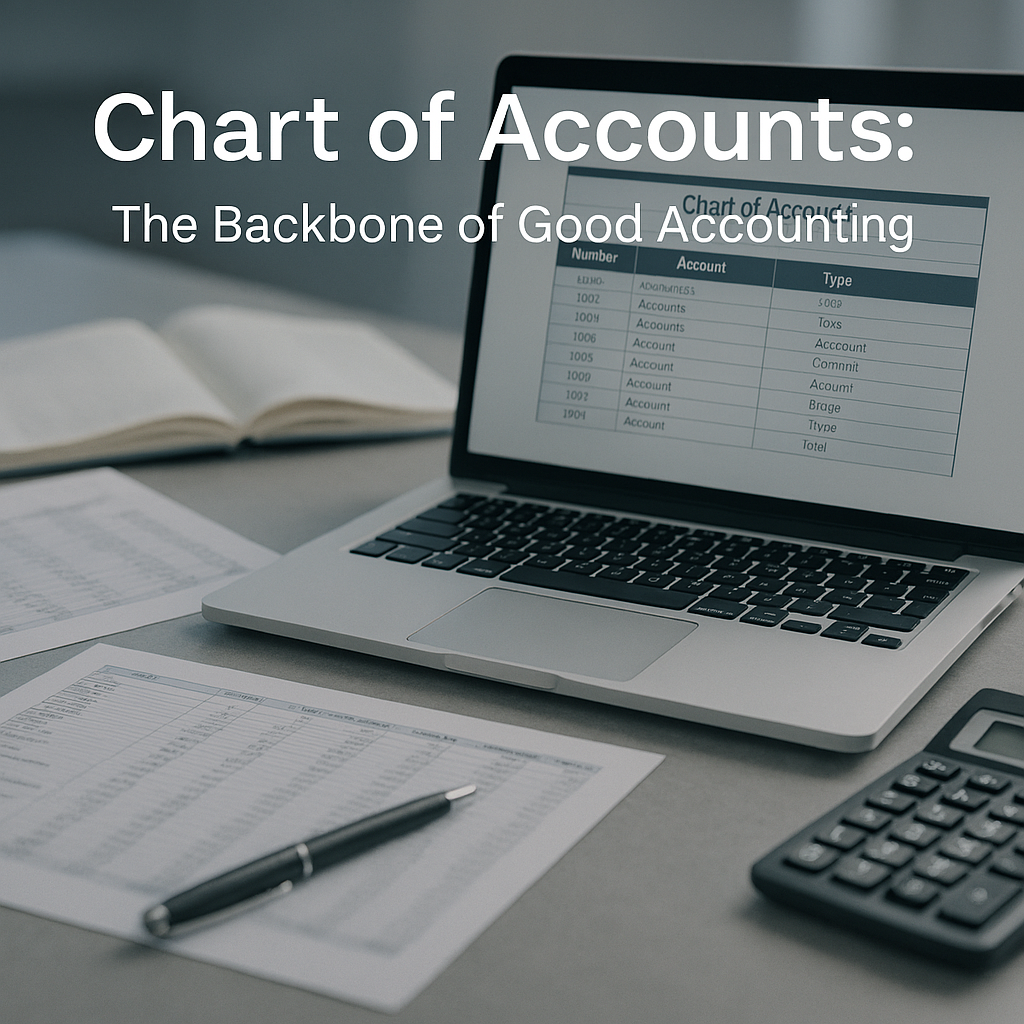
The Chart of Accounts (COA) is the foundational structure in any accounting system, serving as a comprehensive list of all financial accounts in a company’s general ledger that organizes every transaction with alphanumeric codes for precise tracking, detailed reporting, and in-depth analysis. This essential tool not only categorizes assets, liabilities, equity, revenue, and expenses but also acts as the backbone of good accounting by enabling accurate financial statements, facilitating strategic decision-making, ensuring compliance with regulatory standards like GAAP or IFRS, and providing the clarity needed for effective business management.
What Is a Chart of Accounts?
At its most basic level, a Chart of Accounts is a detailed index or catalog of all the financial accounts that appear on a company’s general ledger, which serves as the central repository for recording every business transaction over a specific accounting period. For example, each account is assigned a unique alphanumeric code—such as “1010” for cash or “4100” for sales revenue—which allows for systematic organization and quick retrieval of data. In this manner, the Chart of Accounts transforms raw transaction data into a structured framework that unlocks advanced reporting and analytical capabilities.
Furthermore, by grouping similar transactions together, it helps business managers gain a deeper understanding of their company’s financial health, producing timely and accurate reports that are invaluable for owners, investors, and other stakeholders. Without a well-organized COA, financial data can become fragmented, leading to inefficiencies in tracking cash flows, identifying trends, or spotting anomalies early. Therefore, it functions much like the directories in a computer file system, where each “account” acts as a dedicated folder for specific types of financial activities, rather than referring to actual bank accounts.
Key Takeaways
- A Chart of Accounts directly mirrors the structure of a company’s balance sheet and income statement (often called the profit and loss or P&L statement), providing a complete overview of financial elements like assets, liabilities, equity, revenue, and expenses.
- The categories within the COA are highly individualized, determined by management based on the business’s unique operations, industry, and scale—for instance, a manufacturing firm might include detailed inventory sub-accounts, while a consulting service emphasizes professional fees.
- Once set up, it’s advisable to avoid frequent changes to the Chart of Accounts to maintain historical consistency; however, in the dynamic real world of business, any necessary adjustments—such as adding new accounts for expansion—should be planned meticulously to prevent disrupting past records and requiring extensive re-coding of transactions.
Why a Good Chart of Accounts Matters
First and foremost, the Chart of Accounts is the primary reference tool for your company’s financial structure. It centralizes all accounts, streamlining end-of-period reporting and simplifying compliance with standards like GAAP. In addition, a well-constructed COA prevents errors, such as misclassifying short-term debt as long-term, which could distort key metrics like the current ratio and invite audits. Furthermore, it scales with growth—accommodating new departments, product lines, or locations—while maintaining consistency across the organization.
Four Key Advantages of a Well-Designed Chart of Accounts
Here are four major benefits that highlight why investing in a strong COA is essential:
- Consistency and Standardization — The COA provides a standardized framework for recording transactions across the entire organization. This ensures that every team member, accountant, or department uses the same numbering system and account definitions when making entries, which is crucial for maintaining accuracy, reducing discrepancies, and enabling seamless collaboration—especially in growing teams or multi-location businesses.
- Enhanced Budgeting and Financial Analysis — With a logical COA, budgeting becomes far more precise and actionable. Management can easily allocate funds to specific accounts, compare actual performance against budgets or historical data (e.g., reviewing trends in “Marketing Expenses” or “Sales Revenue”), perform variance analysis, and forecast future performance with greater confidence. This level of detail supports data-driven decisions and helps identify opportunities for cost savings or revenue growth.
- Improved Compliance and Regulatory Alignment — A well-defined Chart of Accounts ensures that journal entries and financial statements comply with regulatory requirements, such as GAAP, IRS guidelines, or industry-specific standards (particularly important in sectors like government, nonprofits, or publicly traded companies). Proper categorization minimizes the risk of non-compliance, simplifies audit preparation, and provides a clear audit trail that regulators and external auditors can readily verify.
- Efficient Error Detection and Prevention — An organized COA makes it much easier to spot and correct accounting mistakes quickly. For example, if a transaction is posted to the wrong account type (e.g., crediting an asset account instead of debiting it, or recording an expense in a revenue category), the misalignment stands out during reviews or reconciliations. This proactive error detection reduces the likelihood of costly financial misstatements and saves significant time during month-end closings.
Ultimately, these advantages contribute to better financial visibility, more informed strategic decisions, and long-term business success.
Key Components and Structure of a Strong Chart of Accounts
A robust Chart of Accounts typically features five top-level categories, with the first three feeding into the balance sheet and the last two into the income statement:
- Assets — What the company owns (e.g., cash, inventory, equipment).
- Liabilities — What the company owes (e.g., loans, accounts payable).
- Equity — Net worth after liabilities (e.g., retained earnings, owner’s equity).
- Revenue — Income from all sources (e.g., sales, investment gains).
- Expenses — Costs and outflows (e.g., wages, rent, depreciation).
Some businesses separate gains and losses as additional categories, expanding to seven.
Balance Sheet Accounts Breakdown
- Current Assets: Quickly convertible to cash (e.g., cash equivalents, accounts receivable, inventory, marketable securities).
- Non-Current Assets: Long-term holdings (e.g., real estate, equipment, intellectual property, goodwill).
- Current Liabilities: Due within one year (e.g., accounts payable, accrued expenses, short-term debt).
- Non-Current Liabilities: Long-term obligations (e.g., leases, long-term loans).
- Equity: Includes common stock, treasury stock, retained earnings, and owners’ equity.
Income Statement Accounts Breakdown
- Revenue: Earned (sales, fees) and unearned (gains); includes negatives like sales returns.
- Expenses: Direct (e.g., COGS) and indirect (e.g., marketing, utilities, payroll, depreciation, interest, taxes).
Numerical Coding and Hierarchy Numerical codes make the system functional. Typically, the first digit denotes the category (e.g., 1 for assets, 2 for liabilities, 3 for equity, 4 for revenue, 5–6 for expenses). Subsequent digits add detail, leaving gaps for future additions (e.g., 10000–19999 for assets, with 10010 as “Cash in Checking”).
This logical structure—mirroring financial statements—ensures clarity. Sub-accounts provide granularity without overcomplication, and descriptions guide accurate use.
For more on setup best practices, check out this helpful guide from NetSuite: Chart of Accounts: Definition, Best Practices, and Examples.
How It Influences Financial Reports
The level of detail in your Chart of Accounts directly sets the ceiling for financial analysis. Reports regroup transactions from these defined categories—whether manual or software-generated—so missing or misclassified data limits insights.
For instance, departmental distinctions in the COA enable profitability analysis by segment. Accurate classification supports compliant statements under GAAP, preventing distortions that erode stakeholder trust (lenders, investors, shareholders). Therefore, a strong COA transforms data into reliable balance sheets, income statements, cash flow statements, and meaningful ratios for clearer financial health assessment.
Enhancing Budgeting and Forecasting
Transitioning to planning, a detailed Chart of Accounts allows precise budget allocation and easy variance tracking (actual vs. budgeted). Aligning accounts with budget categories provides at-a-glance performance views.
In addition, historical trends from consistent categories improve forecasting, helping identify overspending or revenue opportunities early. Without this structure, budgeting relies on approximations, heightening risk and limiting strategic planning.
Simplifying Taxes and Compliance
Finally, the Chart of Accounts streamlines tax preparation by clearly separating deductible expenses from non-deductible ones, aligning with IRS codes for deductions, credits, and depreciation. This creates a solid audit trail, reducing errors, penalties, and stress during filing.
Moreover, proper setup minimizes compliance risks and may uncover overlooked benefits. Reviewing your COA before tax season, in particular, ensures everything is tax-ready.
For insights on how proper setup aids tax compliance, see this resource: Understanding the Chart of Accounts.
For additional guidance on organizing your COA effectively, explore this QuickBooks resource: What is a chart of accounts and how to set one up.
Ready to Strengthen Your Accounting Foundation?
In summary, the Chart of Accounts is far more than a list—it’s the strategic backbone that drives accurate reporting, effective budgeting, smooth tax handling, error reduction, compliance, and overall financial health. Investing time in a thoughtful setup or cleanup pays dividends long-term through better visibility, smarter decisions, and reduced operational stress.
If you’re ready to optimize your Chart of Accounts or need support with bookkeeping, NYA Solutions LLC can help with all your bookkeeping needs, including chart of accounts cleanup and full virtual assistance. Contact us today to get started and take control of your finances with confidence!

Leave a Reply