
✅ Monthly Bookkeeping Checklist to Keep Your Business on Track
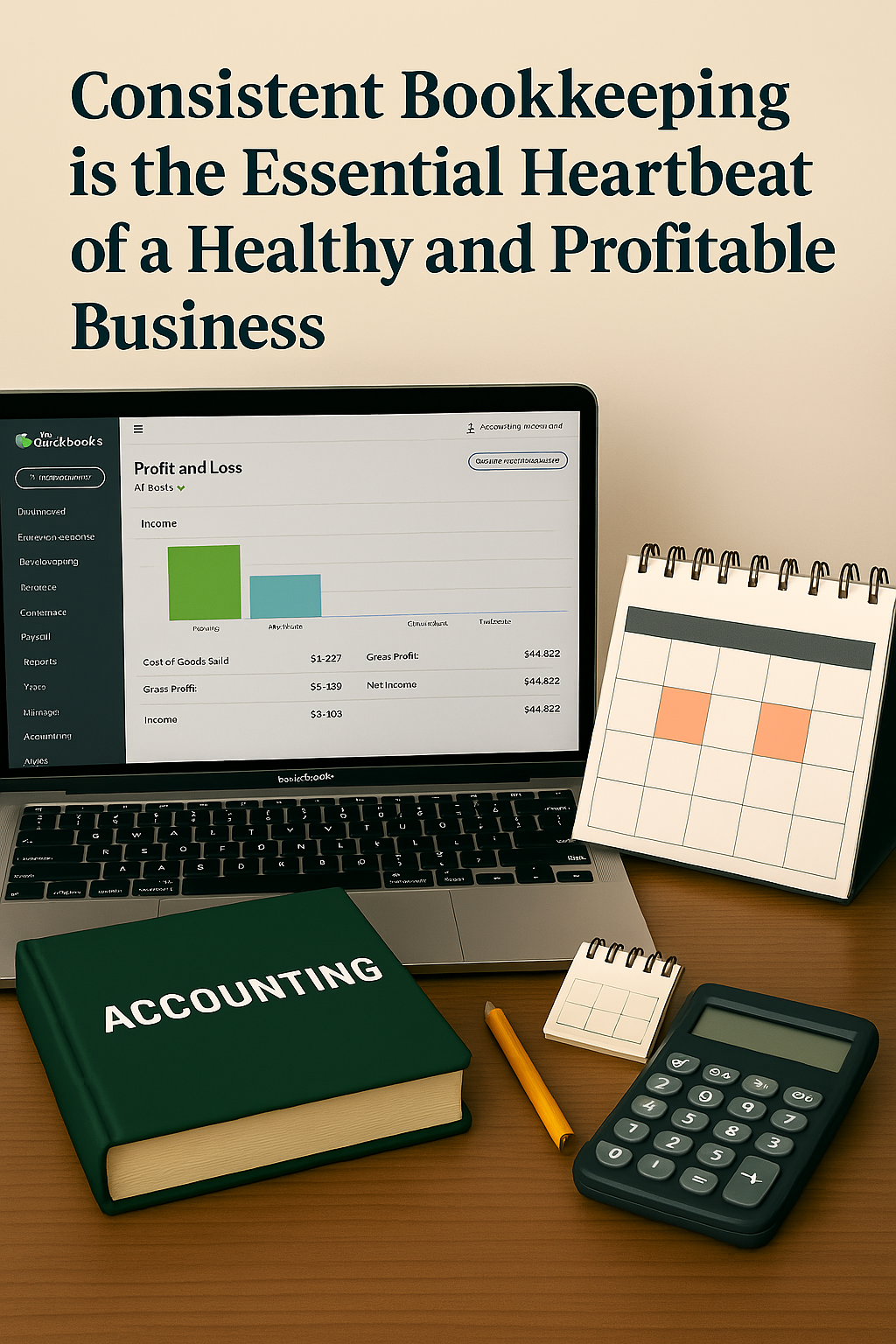
Consistent bookkeeping is the essential heartbeat of a healthy and profitable business. It’s not just about staying compliant—it’s about gaining clarity, maintaining control, and building confidence in every decision you make. Whether you’re a solopreneur or managing a growing team, this monthly checklist will help you stay organized, reduce stress, and drive smarter, more strategic financial decisions.
📅 Why Monthly Bookkeeping Matters
Bookkeeping isn’t a once-a-year scramble—it’s a regular, consistent practice that strengthens your financial foundation and powers long-term success. When you stay on top of your books:
- You catch errors early before they grow into costly problems
- You keep clean, audit-ready records for tax season
- You gain visibility into your cash flow and profitability
- You avoid the overwhelm that comes with disorganized finances
Consistent bookkeeping is the essential heartbeat of a healthy and profitable business—and this checklist ensures you stay in rhythm.
🔄 Reconcile Bank and Credit Card Accounts
Frequency: Monthly
Reconciliation confirms your financial records match your actual bank and credit card activity. It’s a cornerstone of reliable, consistent bookkeeping.
Why this matters:
- Prevents errors and omissions from accumulating
- Detects fraud, duplicate charges, or missed entries early
- Ensures your reports are accurate and trustworthy
Steps:
- Download statements from your bank and credit card providers
- Match transactions in QuickBooks Online
- Investigate and resolve any discrepancies
- Confirm statement balances align with your records
- Document any necessary adjustments
📥 Review and Record Invoices
Frequency: Daily, Weekly, Biweekly, or Monthly (based on volume)
Regularly managing accounts receivable keeps your cash flow healthy and your income predictable.
Why this matters:
- Encourages on-time payments
- Reflects accurate income
- Strengthens your professional relationships
Steps:
- Review open invoices and customer aging reports
- Send timely reminders for overdue invoices
- Record and apply payments accurately
- Send statements as needed
- Flag issues or disputes for follow-up
💸 Categorize and Record Expenses
Frequency: Daily to Weekly (based on volume)
Accurate expense tracking is critical to keeping your business profitable and maximizing deductions.
Why this matters:
- Ensures proper tax reporting
- Keeps financial reports clean and insightful
- Reduces stress during audits or tax season
Tips for success:
- Avoid the “Miscellaneous” trap—create specific accounts
- Regularly review and reclassify unclear entries
- Attach receipts and documentation to each transaction
- Separate personal and business spending
🧾 Review Bills and Payables
Frequency: Daily to Weekly (based on volume)
Stay ahead of what you owe to maintain healthy cash flow and vendor trust.
Why this matters:
- Prevents late fees and missed payments
- Supports solid vendor relationships
- Keeps your expense reporting accurate
Steps:
- Review all outstanding bills
- Schedule payments or set reminders
- Reconcile vendor payments and credits
- Confirm recurring charges are still valid
- Investigate duplicates or overcharges
📊 Run Key Financial Reports
Frequency: Monthly
Reports are your monthly health check. They help you understand where your business stands and where it’s going.
Why this matters:
- Tracks growth and profitability
- Helps plan for taxes, funding, or scaling
- Reveals financial trends and red flags
Essential reports:
- Profit & Loss – Income vs. expenses
- Balance Sheet – Assets, liabilities, and equity
- Cash Flow Statement – Inflows and outflows
- A/R Aging – Who owes you
- A/P Aging – Who you owe
🧮 Review Payroll (If Applicable)
Frequency: Every Payroll Cycle
Accurate payroll supports employee trust and tax compliance.
Why this matters:
- Prevents costly errors or penalties
- Ensures accurate tax filings
- Maintains team morale and legal compliance
Steps:
- Verify hours and pay rates
- Check tax and benefit deductions
- Reconcile liabilities and payroll payments
- File payroll tax forms timely
- Review payroll summaries
🗂️ Backup and Secure Your Financial Data
Frequency: Monthly
Securing your financial data is vital for long-term sustainability.
Why this matters:
- Guards against data loss or breaches
- Protects sensitive client and business info
- Keeps you compliant with data regulations
Steps:
- Export and store reports in a secure location
- Backup QuickBooks (if not cloud-based)
- Review user permissions regularly
- Update passwords and enable 2FA
- Store physical records safely
🧠 Pro Tip: Automate What You Can
Use QuickBooks Online to streamline your consistent bookkeeping routine:
- Set up recurring invoices and bills
- Use bank feeds for automatic transaction imports
- Apply rules for auto-categorization
- Set reminders for key tasks
Automation reduces human error and frees you to focus on what makes your business profitable.
📣 Final Thoughts: Build the Habit That Builds Your Business
Consistent bookkeeping is the essential heartbeat of a healthy and profitable business. When you make it a non-negotiable routine, you replace chaos with clarity, and guesswork with strategy. According to the U.S. Small Business Administration, poor recordkeeping is a leading cause of business failure—and the IRS stresses that well-maintained records are key to substantiating income and deductions.
Whether you handle your books yourself or partner with a professional, staying consistent with these monthly tasks will give you:
- Peace of mind
- Financial control
- A stronger path to long-term success
👉 Ready to take the pressure off and build a better system? Contact NYA Solutions LLC today for expert bookkeeping support—from QuickBooks cleanups to ongoing monthly services designed to keep your business healthy, profitable, and on track.
