
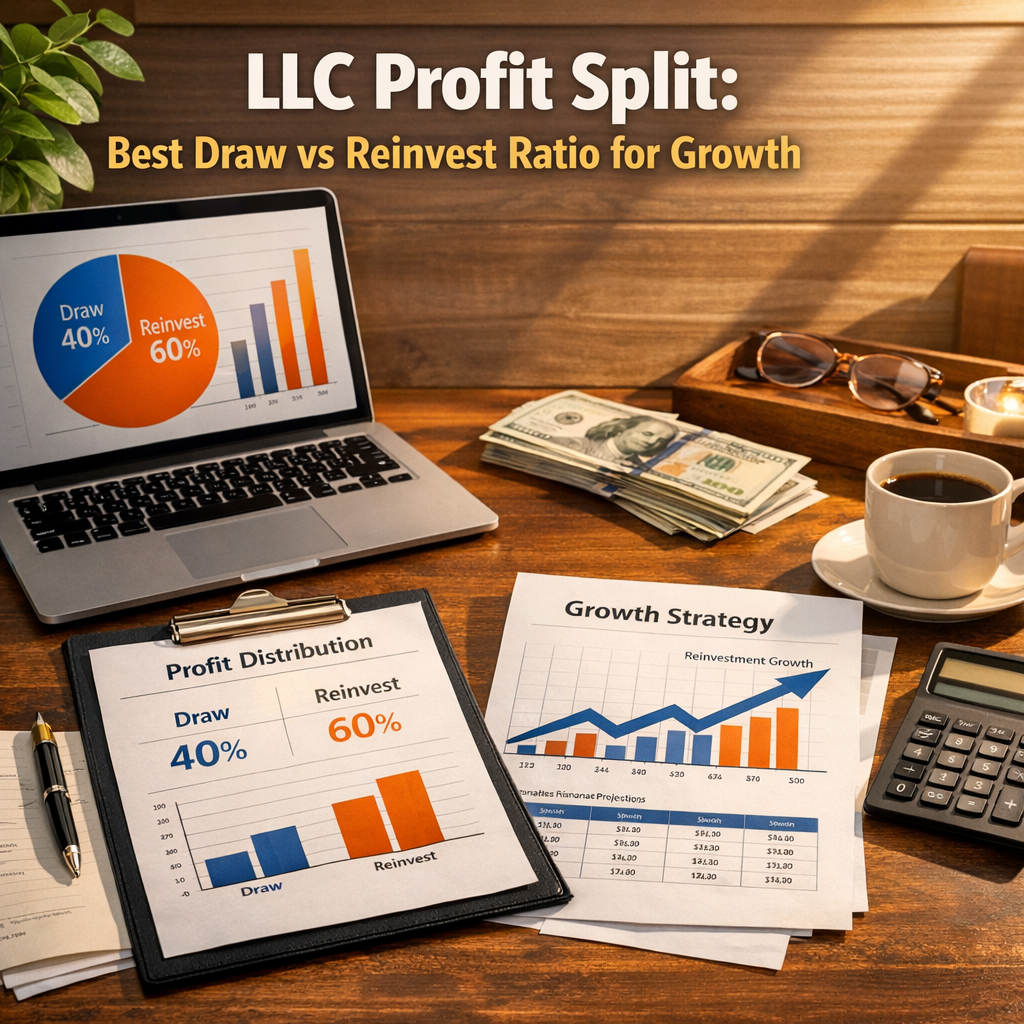
As a single-member LLC owner—often taxed as a sole proprietorship—you face one key decision every time profits roll in: how to handle your LLC profit split. Should you take most as an owner’s draw for personal use, or reinvest heavily to fuel growth? This LLC profit split question trips up many entrepreneurs, especially in businesses with variable revenue. The good news? There’s no one-size-fits-all answer, but smart guidelines help balance personal income, taxes, emergencies, and scaling. In this expert guide, we’ll walk through building a solid foundation first, then explore proven ratios and steps to create your ideal LLC profit split for sustainable growth.
Step 1: Build Your Operating Expense Cushion Before Any Big Draws
Before even thinking about your LLC profit split, secure your business’s safety net. Without a cash buffer, aggressive draws can leave you vulnerable during slow months, unexpected repairs, or client payment delays.
Most financial experts recommend keeping 3 to 6 months of operating expenses in liquid reserves (business checking or high-yield savings). Start with 3 months as your minimum target; aim for 6 months (or more) if your revenue fluctuates or you’re in a higher-risk industry.
To calculate it, first list your true monthly operating expenses—software subscriptions, marketing costs, insurance, utilities (if applicable), supplies, and any fixed overhead. Exclude your personal draws. For example, if your monthly burn rate totals $6,000, target $18,000–$36,000 in reserves.
Additionally, treat this cushion as non-negotiable. Replenish it first whenever profits dip. Once built, you’ll have peace of mind to make smarter draw decisions without fear of cash shortages.
Understanding Owner’s Draws in a Single-Member LLC
Next, let’s clarify what an owner’s draw actually means. In a single-member LLC, you pay yourself via draws—simply transferring money from the business account to your personal one. Unlike a salary, draws aren’t subject to payroll withholding or extra taxes at the time of transfer.
However, remember this crucial point: all net profit (after expenses) flows to your personal tax return anyway. You pay self-employment tax (about 15.3% for Social Security and Medicare) plus income tax on the full profit—whether you draw it or leave it in the business. Therefore, your LLC profit split choice focuses on cash flow, liquidity, and growth strategy rather than tax deferral.
Common mistake? Drawing too much too early, which erodes your ability to cover emergencies or invest in opportunities. That’s why the cushion comes first.
Expert-Recommended Ratios: Draw vs. Reinvest Your Profit
With your reserve in place, now decide the LLC profit split for net profit (after expenses and before draws). While ratios vary by business stage and goals, here are battle-tested frameworks from accountants and small business advisors.
- The popular 50/30/20 rule (simple and effective for many solos): Allocate roughly 50% to personal draws (your take-home after essentials), 30% for taxes (set aside for quarterly estimates), and 20% reinvested in the business (marketing, tools, systems, or extra reserves).
- Growth-focused approach: Reinvest 30–50% (or even up to 70% in early scaling phases). Draw the remainder after taxes and cushion top-ups. This suits owners prioritizing expansion, hiring, or new services.
- Lifestyle or mature business: Reinvest only 20–30%, drawing 70–80%. Ideal when systems run smoothly and you want more personal reward.
For quick reference:
- Startup/High Growth: Reinvest 50–70%, draw 30–50% (post-taxes).
- Steady & Profitable: Reinvest 30–50%, draw 50–70%.
- Mature/Lifestyle: Reinvest 20–30%, draw 70–80%.
Adjust based on factors like industry volatility, personal living needs, and clear ROI opportunities. For more on tax-smart structures, check this QuickBooks guide on owner’s draw vs. salary.
Practical Steps to Implement Your LLC Profit Split
Fortunately, applying your ratio becomes straightforward with a quarterly routine.
- Calculate net profit for the period.
- Verify and top up your 3–6 month cushion if needed.
- Set aside 25–35% for taxes (adjust based on your bracket and self-employment tax).
- Fund high-priority reinvestments with proven returns (e.g., ads that boost leads).
- Draw the rest—or a consistent percentage—for personal use.
Many owners set a modest “base draw” (like a salary equivalent) for steady income, then take bonus draws from excess profit. Use separate accounts: one for operations, one for taxes, one for reserves, and one for profit allocation. Tools like QuickBooks make tracking effortless.
For deeper insights into paying yourself wisely, see this Housecall Pro resource on paying yourself as a business owner.
Real-World Examples
Consider these scenarios tailored to common small business situations:
- Early-stage consulting LLC netting $10,000/month profit: Reinvest 50% ($5,000) into marketing and certifications, set aside 30% for taxes, and draw 20% ($2,000) after cushion check. This fuels client growth without burnout.
- Established service business with steady $15,000/month profit: Reinvest 25% for equipment upgrades, reserve taxes, and draw 60–70% for lifestyle and savings—enjoying the fruits while maintaining stability.
Reassess every quarter; ratios evolve as your business does.
In summary, prioritize your 3–6 month operating cushion, then craft a thoughtful LLC profit split that supports both growth and your well-being. Whether you lean toward heavy reinvestment or balanced draws, consistent review keeps everything aligned.
Ready to streamline your LLC profit split, track draws accurately, and avoid common pitfalls? NYA Solutions LLC can help with all your bookkeeping needs—from setting up proper accounts and reserves to quarterly profit reviews and tax-ready reports. Visit us at nyasolutionsllc.com to learn more, or head straight to our contact page to schedule a consultation today. Let’s get your finances working as hard as you do!
